Brown Family Orthodontics' back-to-school survival guide for students, parents, and teens across South Louisiana and the Mississippi Gulf Coast.
Key Takeaways
- A loose bracket at lunch is not an emergency. It is a phone call, and it usually waits until your next visit.
- About 23 percent of braces patients develop a chalky white spot during treatment, and nearly all of it traces to brushing (Julien et al., The Angle Orthodontist ).
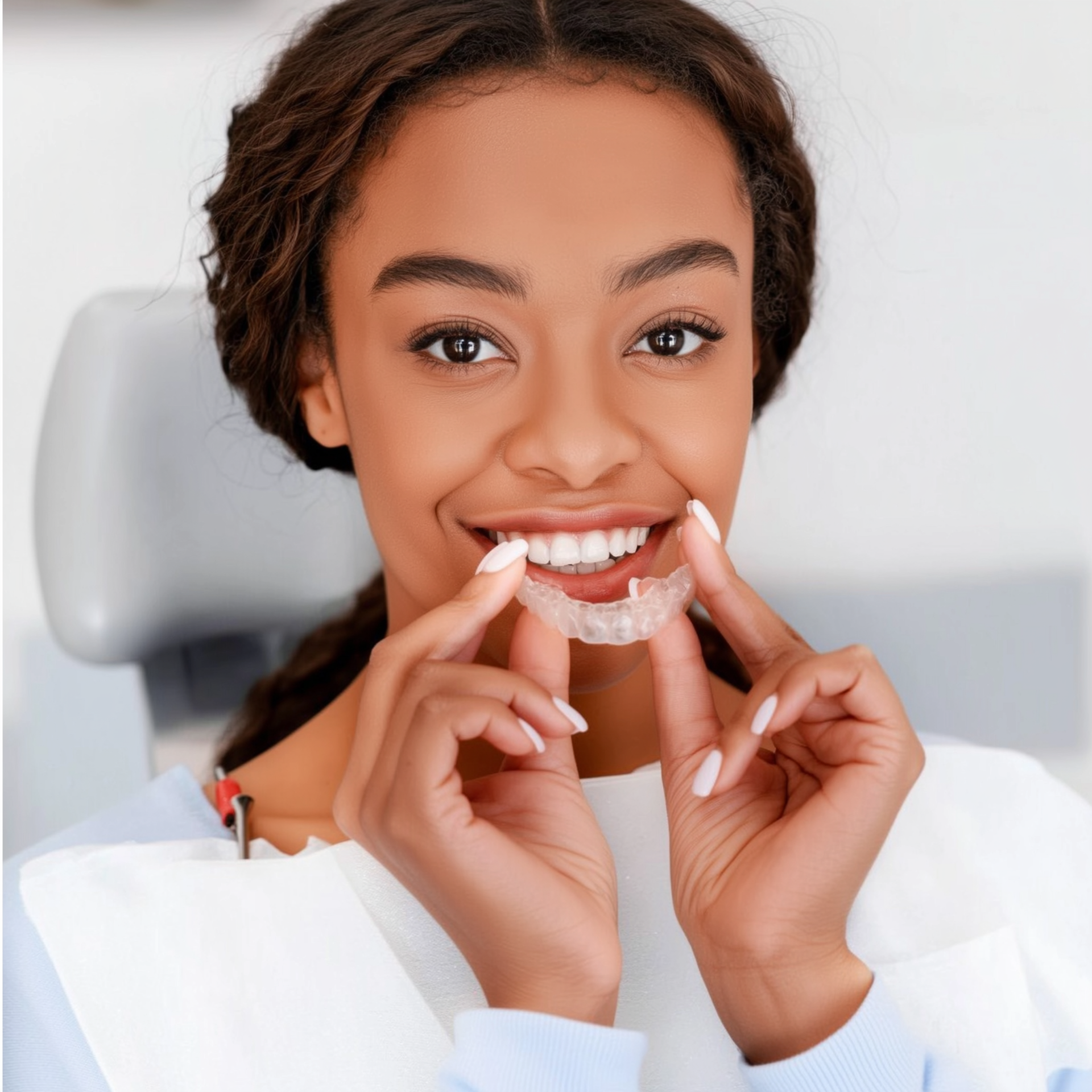
- Aligners belong in the mouth 20 to 22 hours a day, so the school day is where wear time gets lost.
- A lunchroom napkin is the most common way students lose aligners.
- It all fits in one pencil pouch. We call it the 6-Item Back-to-School Kit.
Introduction
A seventh grader in Chalmette bites a cafeteria pizza crust and feels a bracket slide sideways. A junior in Ocean Springs folds her aligners into a napkin, turns to talk to a friend, and watches the tray go into the trash. A trumpet player in Mandeville finishes rehearsal and realizes his lip has been rubbing raw against a wire since first bell.
We have watched students live through those exact moments for more than 50 years. Dr. Jess grew up in Covington and walked the halls of St. Scholastica Academy herself before earning her orthodontic certificate at St. Louis University. Dr. Ed has been in private practice for more than two decades. Between us, we have treated more than 15,000 smiles across Louisiana and Mississippi, and the pattern rarely varies. The students who cruise through treatment are not the ones with the simplest cases. They are the ones who packed for the school day.
That is the whole secret. Treatment is not won or lost in our chairs every eight weeks. It is won or lost in a cafeteria line, a band hall, and a locker room, in the ten-minute gaps between classes. Here is exactly what belongs in the backpack, and why each item earns its space.
Why the School Day Decides How Treatment Goes
Consider the math. Between the first bell and the last, a student eats two meals and a couple of snacks. That is four or five times a day when food packs around brackets or aligners come out. Across a full treatment, the school day holds most of the hygiene decisions a patient will ever make.
The good news is that the fix is simple. A pouch of small items and three minutes of habit. Skip it, and the result surfaces months later as chalky marks along the gumline that do not brush away. The American Dental Association (ADA) puts it plainly: cleaning around appliances is the part of treatment patients control.
The share of braces patients who developed at least one white spot lesion, a permanent chalky patch of softened enamel, across 885 patients studied.
Roughly one student in four finishes with straight teeth and a mark they did not have before. Hygiene was among the drivers, which is why a toothbrush in the backpack is not a small thing.
Julien, K. C., Buschang, P. H., and Campbell, P. M. (2013). The Angle Orthodontist , 83(4), 641 to 647.
The Kit at a Glance: Braces Versus Aligners
Both groups pack most of the same things. The differences are worth knowing before you shop.
If you wear braces
- Wax is the item you cannot skip.
- Brush after lunch. Food packs behind brackets and stays.
- Hard, sticky, and chewy foods are the risk.
If you wear aligners
- A hard case is the item you cannot skip.
- Brush before trays go back in, or you seal food against enamel.
- Colored drinks are the risk. They stain trays and feed decay underneath.
- You cannot forget to wear them. An hour in a backpack is an hour of treatment not happening.
Item One: Orthodontic Wax, the Fix That Fits in a Pocket
Wax is the cheapest insurance in orthodontics. A wire shifts, an end presses into the cheek, and a pea-sized ball of wax turns a miserable afternoon into a non-event. We hand it out at every appointment, and we would rather a student carry three containers than none.
Teach the technique once, and it sticks. Dry the bracket with a tissue first, because wax will not hold on a wet surface. Roll a small piece between clean fingers until it softens, then press it over the spot that is rubbing.
Wax at School
- PACK Two containers. One in the pouch, one in a locker or gym bag.
- PLACE Dry the area, warm the wax between your fingers, press it over the bracket.
- KNOW Wax is comfort, not repair.
- AVOID Gum and paper are not substitutes. Both trap bacteria.
Item Two: A Travel Toothbrush and a Small Tube of Toothpaste
This is the item that changes outcomes, and the one students most often leave at home. A soft-bristled folding brush takes less room than a granola bar. Add fluoride toothpaste and the after-lunch routine takes two minutes.
For students in braces, brush fully after lunch whenever the schedule allows, because food packed behind a bracket at noon otherwise sits there until bedtime. For students in Invisalign or Spark Clear Aligners, brushing before the trays go back in is not optional. Sealing sugar under a tray for the rest of the day is the fastest route to a cavity we know.
The Two-Minute Lunch Routine
- RINSE Swish hard with water first. This alone helps when there is no time to brush.
- BRUSH Bristles angled down toward the gumline above the brackets, then up from below. Two minutes of brushing.
- CHECK Smile. See anything between the brackets? Keep going.
- AVOID Never put aligners back in over an unbrushed mouth.
Item Three: Floss Threaders or a Proxy Brush
Regular floss will not pass an archwire, which is why so many patients quietly stop flossing the day braces go on. A floss threader solves it for pennies. It is a plastic loop that carries floss behind the wire so you can clean between the teeth normally.
If threaders are a hard sell, a proxy brush is the compromise. It looks like a tiny bottle brush and slides between wire and tooth to sweep out what a toothbrush cannot reach. We would rather a student use one daily than use threaders once a month. Pack whichever they will actually pull out.
Across 244 aligner patients and 206 braces patients, about 1 percent of the aligner group developed white spots, against about 26 percent in braces.
Not a reason to pick one treatment over the other, since the right appliance depends on your bite. It is a reason to know braces ask more of a cleaning routine.
Buschang, P. H., Chastain, D., Keylor, C. L., Crosby, D., and Julien, K. C. (2019). The Angle Orthodontist , 89(3), 359 to 364.
Item Four: A Hard Aligner Case, Never a Napkin
If your student wears aligners, this is the most important thing in the backpack. We would put it above the toothbrush. The napkin is how aligners get lost. A tray goes into a folded napkin, the napkin onto the lunch tray, the tray into the trash.
A hard case in a loud color solves it permanently. Bright orange is harder to leave behind than clear plastic. The American Association of Orthodontists (AAO) is direct: trays come out for eating, for drinking anything but water, and for brushing. That is four or five removals a day, and each is a chance to lose a tray that vanishes when the case is right there.
Wear time is why this matters. The target is 20 to 22 hours a day, leaving about two hours out. Lunch and a snack fit that budget easily. A tray riding in a backpack through fifth period does not. The habit that fixes it is trays back in before leaving the cafeteria. Our post on the advantages families notice most with clear aligners covers how treatment fits a busy life.
Aligner Rules at School
- REMOVE Trays out for every meal, every snack, and anything but plain water.
- STORE Into the hard case before the first bite. Not a napkin, not a pocket, not the lunch tray.
- RINSE Cool water before they go back in, and brush first whenever you can.
- AVOID Never hot water. Heat warps the plastic, and a warped tray means a replacement.
Item Five: A Refillable Water Bottle
Water is the most underrated item here. It rinses sugar off enamel between classes and is the only thing a student in aligners can drink with the trays in. On a marching field in August heat, it does double duty. Sports drinks and sodas are the opposite, acidic and sugary, and under an aligner they bathe the tooth for hours. If a student has one, take the trays out, drink, rinse, and put them back.
Item Six: A Lunch Plan That Will Not Cost You a Bracket
Most broken brackets we repair trace to about six foods. Hard candy, ice, whole apples and raw carrots bitten directly, popcorn, nuts, and anything chewy enough to pull. None of it is banned forever. It needs to be cut, cooked, or skipped while brackets are on.
In practice: slice the apples and carrots, choose soft tortillas over crusty bread, skip the popcorn at the game. A fuller list lives on our frequently asked questions page, and our guide to keeping braces comfortable while traveling covers the same ground for weekends and road trips.
Not sure whether braces or aligners fit your student better?
That answer depends on the bite, not on preference alone, and it takes one visit to sort out. New patient consultations at Brown Family Orthodontics are always free, at every one of our seven offices. Call the location closest to you, and we will find a time that works around the school schedule.
Braces Do Not Mean Giving Up Band or Sports
We hear this every August, usually from a parent standing next to a nervous eighth grader. It is one of the most persistent myths in orthodontics, and it is not true. Students play football in St. Bernard Parish, wrestle in Jackson County, and march with the Ocean Springs and Pascagoula-Gautier bands straight through treatment. Brass and woodwind players need a week or two to adjust, and wax helps during that stretch.
What does change is protection. A student in a contact sport needs a mouthguard sized over the brackets, which is a conversation with us rather than a guess in a sporting goods aisle. Our guide to sports and orthodontics covers the options, and the national mouthguard recommendations for school sports back it up. The right guard keeps lips and cheeks from being driven into the brackets.
Did You Know?
The Louisiana High School Athletic Association (LHSAA) and the Mississippi High School Activities Association (MHSAA) both follow National Federation of State High School Associations (NFHS) rules. Under those rules, a wrestler with braces is required to wear a tooth and mouth protector over the appliance, on both arches if appliances are on both. Wrestling is the one sport allowing a clear guard. Football guards must be a visible color other than white. So: buy the guard in a bright color and bring it to your next appointment. We will make sure it fits like it should.
When Something Goes Wrong During Third Period
Almost nothing that happens to braces at school is an emergency. We want students to hear that before it happens rather than during. A loose bracket, a slid wire, a lost aligner: we handle all of it at a regular visit, and none of it requires leaving class in a panic.
Call us the same day so we can decide whether you need to come in sooner. Most of the time we will tell you it waits until your next appointment, and the student goes back to their afternoon.
LOOSE BRACKET
Still on the wire? Leave it, cover it with wax. Fully off? Bag it for your next visit.
POKING WIRE
Cover the end with wax. A clean pencil eraser can tuck a long end toward the tooth.
LOST ALIGNER
Put the previous tray back in rather than skipping ahead, and call your office.
SORE TEETH
Soft foods for a day or two and your usual pain reliever. Tenderness fades fast.
Why Families Across Louisiana and the Mississippi Gulf Coast Choose Us
- Seven offices, so school is not the obstacle. Chalmette, Metairie, Marrero, Mandeville, Madisonville, Ocean Springs, and Pascagoula, across Jefferson, St. Bernard, and St. Tammany parishes and the Gulf Coast.
- More than 50 years of family-owned care. Dr. Ed and Dr. Jess continue the practice their father built, which is why so many patients are the children of former patients.
- More than 740 five-star reviews. A 5-star Google rating built one family at a time across two states.
- More than 15,000 smiles completed. Enough school years behind us to know which problems surface in September. We’ve got you covered.
- All three options under one roof. Braces, Invisalign, and Spark Clear Aligners, so the recommendation follows the bite.
- A team that knows the school calendar. We schedule around band camp and testing weeks, and every new patient visit starts with a free consultation.
The Short Version
Pack a pouch. Wax, a travel toothbrush and toothpaste, floss threaders or a proxy brush, a hard aligner case, a water bottle, and a braces-friendly lunch. That is the whole list, it costs less than a pair of cleats, and it separates treatment that stays on schedule from treatment that does not.
Your student will spend more waking hours at school than anywhere else. Set them up for those hours and the rest takes care of itself.
Brown Family Orthodontics
BROWN FAMILY ORTHODONTICS
Free consultations for every new patient, at all seven locations.
LOUISIANA LOCATIONS
Chalmette: 200 W. Judge Perez Drive, Chalmette, LA 70043 │ (504) 455-1625
Metairie: 4429 Chastant Street, Metairie, LA 70006 │ (504) 455-1625
Marrero: 7301 West Bank Expressway, Marrero, LA 70072 │ (504) 455-1625
Mandeville: 2885 Highway 190, Mandeville, LA 70471 │ (985) 626-8297
Madisonville: 109 Pine Creek Drive, Madisonville, LA 70433 │ (985) 893-1044
MISSISSIPPI LOCATIONS
Ocean Springs: 8801 Old Spanish Trail, Ocean Springs, MS 39564 │ (228) 872-8153
Pascagoula: 4105 Hospital Street, Suite 101, Pascagoula, MS 39581 │ (228) 762-4403
Proudly serving: Chalmette, Arabi, Meraux, Violet, Metairie, Kenner, Marrero, Harvey, Gretna, Westwego, Mandeville, Madisonville, Covington, Abita Springs, Slidell, Ocean Springs, Biloxi, Gautier, Pascagoula, and Moss Point.
Office Hours
Monday: 8:30 AM to 4:30 PM
Tuesday: 8:30 AM to 4:30 PM
Wednesday: 8:30 AM to 4:30 PM
Thursday: 8:30 AM to 4:30 PM
Friday: 8:00 AM to 2:00 PM
Call 1-877-230-7841 │ www.brownfamilyortho.com
→ Request your free consultation today and start the school year with a plan.Frequently Asked Questions
What should a student with braces pack for school?
Orthodontic wax, a travel toothbrush with fluoride toothpaste, floss threaders or a proxy brush, and a water bottle. Students in aligners should add a hard-sided case. It all fits in one pencil pouch.
What do I do if a bracket comes loose during class?
Cover it with wax and call your office the same day. This is not an emergency and rarely requires leaving school. Most loose brackets wait until the next scheduled visit, and the team at your location will tell you.
Where should my child keep aligners during lunch?
In a hard-sided case, every time, before the first bite. Napkins are how aligners end up in cafeteria trash cans, and a replacement costs time. Bright cases are harder to leave behind than clear ones.
Can you play sports or march in band with braces?
Yes, and students across Louisiana and Mississippi do it every year. Brass and woodwind players need a week or two to adjust, and wax eases that stretch. Contact-sport athletes need a mouthguard fitted over the brackets, so bring it to your appointment.
How often should you brush at school with braces?
After lunch at minimum, and after snacks when the schedule allows. If there is no time, a hard water rinse clears most loose food. Call us at 1-877-230-7841 for help building a routine that fits your student's day.
Sources
- Julien, K. C., et al. (2013). Prevalence of white spot lesion formation during orthodontic treatment. The Angle Orthodontist , 83(4), 641 to 647. DOI: 10.2319/071712-584.1. Read full study
- Buschang, P. H., et al. (2019). Incidence of white spot lesions among patients treated with clear aligners and traditional braces. The Angle Orthodontist , 89(3), 359 to 364. DOI: 10.2319/073118-553.1. Read full study
- Hussain, U., et al. (2025). Prevalence, incidence and risk factors of white spot lesions associated with orthodontic treatment: a systematic review and meta-analysis. Orthodontics and Craniofacial Research , 28, 379 to 399. DOI: 10.1111/ocr.12888. Read full study
- American Association of Orthodontists. Aligners: patient treatment information. View patient resource
- American Dental Association. Braces. MouthHealthy. View patient resource
- National Federation of State High School Associations. Position statement and recommendations for mouthguard use in sports. View position statement
Medical disclaimer: This article is provided for general educational purposes and does not constitute medical or dental advice, diagnosis, or treatment. It is not a substitute for an in-person evaluation by a licensed orthodontist, and reading it does not create a doctor-patient relationship. Guidance on packing lists, appliance care, and at-school routines is general in nature and may not apply to your specific treatment plan, so always follow the individual instructions given by your own orthodontist regarding your appliances, wear time, and any repairs.